If you run a business in a remote or northern market, your homepage alone won’t carry your search visibility. Customers searching for what you offer — whether they’re planning a trip, ordering online, or looking for a local service — ask dozens of specific questions before they ever click “contact.” A well-structured website answers those questions on dedicated pages, each one targeting a distinct search intent.
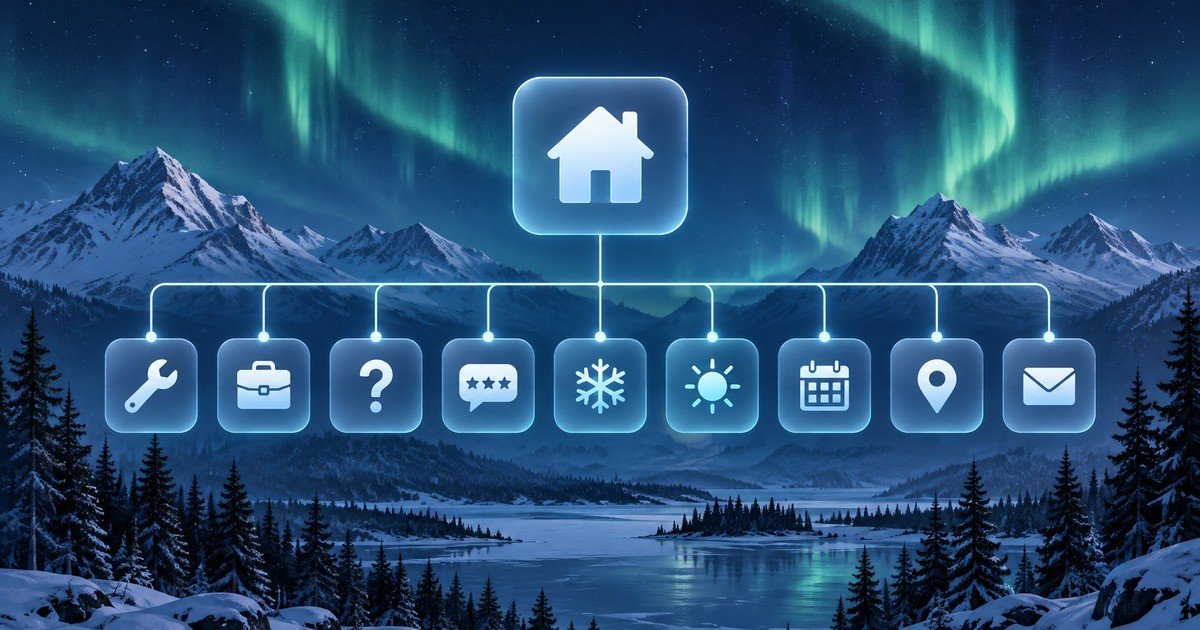
This checklist covers the 9 types of pages that consistently drive organic traffic for remote and rural businesses. Skip the thin town-by-town location clones that Google ignores. Build these instead.
1. Core Service or Product Pages (One Per Offering)
Your homepage introduces your business. Your service pages do the selling. Each major service or product category deserves its own page with a clear title, a description of what’s included, who it’s for, and what the outcome looks like.
For a northern outfitter, that might mean separate pages for guided fishing trips, winter snowmobile tours, and summer hiking packages — not one page that lists all three in a paragraph.
Why it works: Search engines match specific queries to specific pages. A page titled “Guided Ice Fishing Trips in Northern Manitoba” will rank for that phrase far better than a homepage that mentions ice fishing once.
2. Use-Case Pages for Weather, Distance, and Trip-Planning Questions
Remote customers plan differently. They’re asking: What do I need to pack for a winter visit? How far is it from the nearest airport? What’s the road like in spring? These are real pre-purchase questions, and they deserve real pages.
Build use-case pages around the conditions and logistics your customers navigate. Examples:
– “What to Expect Driving to [Your Location] in Winter”
– “Best Time of Year to Visit [Your Region] for [Activity]”
– “What’s Included in Our All-Inclusive Northern Packages”
These pages capture long-tail search traffic and reduce friction for first-time buyers who are unfamiliar with your area.
3. A Detailed FAQ Page (Structured for Featured Snippets)
A well-built FAQ page does double duty: it answers common customer questions and it targets the “People Also Ask” boxes that dominate search results for informational queries.
Structure your FAQ with clear question-and-answer pairs using proper heading tags (H3 for each question). Cover logistics, pricing transparency, cancellation policies, accessibility, and anything customers ask repeatedly in emails or calls.
Pro tip: Use schema markup (FAQ schema) to help search engines display your answers directly in results — especially valuable for mobile searchers on slow connections.
4. Proof Pages: Testimonials, Case Studies, and Results
A business located far from its customers faces a credibility gap. Proof pages close it. These include:
– A dedicated testimonials or reviews page with real customer quotes and photos
– Short case studies showing before-and-after outcomes
– A “Results” or “Success Stories” page with specific numbers
For a remote e-commerce brand, this might be a page showing customer photos from across the country using your products in cold-weather conditions. For a northern service business, it could be a page of verified reviews from guests who traveled from major cities.
Internal link opportunity: If you’ve already built your Google Business Profile to collect reviews, your proof page can reference and reinforce that social proof.
5. A “How We Work” or Process Page
Remote customers can’t walk into your shop to assess you. A process page — explaining step by step what happens from inquiry to delivery — builds trust and reduces the hesitation that kills conversions.
This page should answer:
– How do customers reach you? (phone, email, booking form)
– What happens after they contact you?
– What are the timelines?
– What do they need to prepare or bring?
Keep it specific and human. Avoid generic corporate language.
6. Seasonal Intent Pages
Northern and cold-climate businesses have natural seasonal demand cycles. Build pages that capture search intent at each peak:
– “Summer [Service] in [Region]”
– “Winter [Product] Shipping to Remote Areas”
– “Holiday Gift Ideas for [Niche Audience]”
These pages can be updated annually rather than rebuilt from scratch. A seasonal page that earns links and traffic in year one compounds in year two. For more on planning around seasonal peaks, see our guide on analytics trends for northern and seasonal businesses.
7. A Shipping, Delivery, or Logistics Page
For remote e-commerce businesses, shipping is often the biggest purchase barrier. A dedicated logistics page that clearly explains:
– Which regions you ship to
– Estimated delivery times by zone
– Cold-weather packaging practices
– Return and exchange policies for remote customers
…can be the difference between a completed order and an abandoned cart. This page also ranks for queries like “does [brand] ship to [remote region]” — a real search pattern for northern shoppers.
8. A Local Area or Destination Guide Page
If your business depends on visitors traveling to your location, a destination guide page serves two purposes: it helps customers plan their trip, and it earns search traffic from people researching your region.
This isn’t a thin “we’re located in [town]” page. It’s a genuine resource covering:
– What to do in the area beyond your business
– Accommodation options nearby
– Travel tips specific to the season
– Local conditions and what to expect
Destination guide pages attract backlinks from travel blogs, regional tourism sites, and local directories — all of which strengthen your domain authority.
9. A “Who We Serve” or Audience Page
Remote businesses often serve a specific type of customer: hunters, anglers, remote workers, northern homesteaders, adventure travelers, or seasonal residents. A page that speaks directly to that audience — using their language, addressing their specific concerns — converts better than generic copy.
This page also helps with SEO by clustering relevant keywords around a defined audience segment. “Gear for Remote Homesteaders in Northern Canada” is a more targetable phrase than “outdoor products.”
Build the Pages That Match Real Customer Journeys
The businesses that win in remote and rural search aren’t the ones with the most pages — they’re the ones with the most useful pages. Each page on this list exists to answer a question a real customer is asking before they decide to buy, book, or contact you.
Start with your core service pages if you haven’t built them yet. Then layer in use-case pages, proof pages, and seasonal content as your capacity allows. A focused SEO content strategy for rural businesses doesn’t require a massive content team — it requires the right pages, built once and maintained well.
For more on reaching customers in northern and remote markets, explore the ArcticMarketer resource library — built specifically for businesses operating where the audience is small but the opportunity is real.